
Old Ceramic Block Foundations: History, Durability, Identification, and Restoration Tips

A basement wall made of hollow clay blocks can look unusual at first glance. The blocks may be orange, red, tan, or glazed brown, with ribbed faces and hollow cores hidden inside. To some homeowners, they seem fragile compared with poured concrete. In many older houses, though, these foundations have been carrying their load for generations.
Old ceramic block foundations are more than a construction detail. They tell a story about local materials, early 20th-century building methods, and the long life of masonry when it is kept dry and well supported.
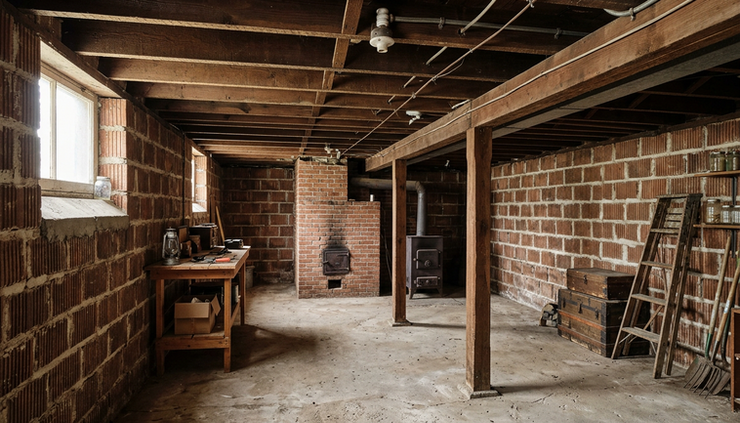
Why ceramic block foundations became common
Ceramic foundation blocks, often called structural clay tile or hollow clay tile, became popular in parts of the United States during the late 19th and early 20th centuries. They were made from fired clay, much like brick or terra cotta. Manufacturers formed the clay into hollow units, dried them, and fired them in kilns.
Builders liked these blocks for several reasons:
They were lighter than solid stone or brick.
The hollow cores made them easier to handle.
Fired clay resisted rot, insects, and many common forms of decay.
Blocks could be laid quickly by masons using familiar mortar techniques.
In areas with strong clay industries, ceramic block products were widely available. They appeared in foundations, partition walls, fireproof floor systems, and commercial buildings. In homes, they offered a practical middle ground between traditional stonework and newer concrete methods.
These foundations often show up in houses built before poured concrete became the default choice. Some were used above grade, some below grade, and some in combination with brick, stone, or concrete footings.
How builders constructed ceramic block foundations
A ceramic block foundation was usually built by laying individual hollow blocks in courses, much like brick or concrete masonry units. Mortar bonded the blocks together at the horizontal and vertical joints.
The blocks varied in size and shape, but many had internal webs that created hollow cells. Some faces were ribbed or scored so plaster, stucco, or parging could grip the surface. In many foundations, the hollow cells run horizontally, although orientation depends on the block type and installation.
Good construction depended on a few key details:
A stable footing
The foundation needed a solid base, commonly stone, brick, or early concrete. If the footing settled, the ceramic wall could crack along the joints.
Sound mortar joints
Mortar distributed loads between blocks. When mortar stayed intact, the wall acted as a unified mass.
Moisture control
Like most masonry, ceramic block performs best when water drains away from it. Fired clay is durable, but constant saturation can damage mortar, finishes, and the surrounding soil support.
Proper load paths
These blocks were designed to carry vertical loads. They do not love side pressure from expanding clay soils, frost, or poor drainage.
That last point matters. Ceramic block walls can be strong, but they are not magic. Their long-term performance depends as much on water management and soil conditions as on the blocks themselves.
How ceramic blocks compare with modern foundation materials
Modern residential foundations are usually made from poured concrete, concrete block, insulated concrete forms, or engineered systems. Each material has strengths.
Material | Common strengths | Common concerns |
Ceramic block | Long-lasting fired clay, resistant to insects and rot, historically appropriate | Mortar deterioration, cracking from soil pressure, limited replacement availability |
Poured concrete | Monolithic wall, high compressive strength, widely used | Cracking, water seepage through joints or defects, repair quality varies |
Concrete block | Easy to build, common materials, straightforward repairs | Hollow cores can admit water, mortar joints need maintenance |
Stone | Very durable, attractive, thick walls | Irregular joints, movement, moisture issues in older homes |
Ceramic block often compares well with these materials when it has been protected from water. Fired clay does not rust, rot, or attract termites. Many ceramic foundations still look crisp after decades because the blocks themselves are stable.
The weaker points are usually the mortar, drainage, and structural movement, not the clay unit. If a wall bows inward, cracks stair-step through joints, or sheds soft mortar, the problem deserves attention. The same would be true for concrete block or stone.
How to identify a ceramic block foundation
Ceramic block is often easy to spot once you know what to look for.

Look for these signs:
Clay coloring Blocks may be orange, red, buff, tan, or brown.
Hollow sound A gentle tap may sound less solid than stone or poured concrete. Do not strike hard, since older units can chip.
Regular units Blocks are usually uniform in shape, unlike fieldstone.
Ribbed or scored faces Many blocks have grooves meant to hold plaster or cement parging.
Visible mortar joints Horizontal and vertical joints form a grid pattern.
Glazed surfaces Some structural clay tile has a hard glazed face, especially in utility spaces or above-grade walls.
In finished basements, ceramic block may hide behind plaster, paint, paneling, or parging. If only a small section is exposed near a utility area, inspect there first. Avoid removing finishes aggressively, since older coatings may contain lead-based paint or other hazardous materials.
How to maintain ceramic block foundations
The best maintenance is usually simple: keep water away, watch for movement, and repair small defects before they grow.
Start outside the house. Gutters should discharge away from the foundation. Downspouts need extensions or underground drains that move water well clear of the wall. Soil should slope away from the house, not toward it. Shrubs and planting beds should not trap moisture against masonry.
Inside, look for warning signs:
Damp patches after rain
White powdery deposits, known as efflorescence
Soft or missing mortar
Stair-step cracks
Bulging or bowing walls
Loose parging or plaster
Musty odors near exterior walls
A small amount of efflorescence does not always mean serious damage. It means moisture has moved through masonry and left mineral salts behind. Still, repeated moisture is a signal to improve drainage.
For routine care, use gentle cleaning methods. A stiff nylon brush and mild water are often enough for dirt or loose salts. Avoid aggressive sandblasting, harsh acids, or waterproof paints that trap moisture inside the wall. Trapped moisture can make freeze-thaw damage and mortar decay worse.
Restoration methods that protect old masonry
Restoration should respect how these walls were built. A heavy-handed repair can create new problems.
Repointing is one of the most common repairs. A mason removes loose or failing mortar and replaces it with compatible mortar. The replacement should not be harder than the original masonry. Mortar that is too hard can force stress into the ceramic blocks and cause spalling or cracking.
Parging can help protect and smooth the surface. This thin cement or lime-based coating covers the block face and joints. It should be breathable and well bonded. If old parging is loose, it needs removal before new material goes on.
Crack repair depends on the cause. Hairline mortar cracks may need repointing. Wider cracks, offset blocks, or bowing walls may call for structural evaluation. In some cases, reinforcement, wall anchors, or partial rebuilding may be needed.
Drainage upgrades often give the biggest benefit. Exterior grading, gutter work, footing drains, sump systems, and waterproofing membranes can reduce the pressure and moisture that damage masonry. The right method depends on access, soil, climate, and the condition of the wall.
Selective block replacement is possible when individual units are broken. Matching old ceramic blocks can be difficult, so repairs may use salvaged units, compatible clay tile, or carefully chosen masonry substitutes. The goal is to preserve strength while keeping the wall’s character.
For modern homes, restoring rather than replacing these foundations can offer clear benefits. It preserves historic fabric, reduces unnecessary demolition, and keeps a durable system in service. It can also help an older basement remain dry, stable, and usable without erasing the building’s original identity.
A foundation worth understanding
Ceramic block foundations may look unfamiliar, but they are not automatically weak or outdated. Many were built with skill and have lasted because fired clay is a tough material. Their future depends on the basics: dry soil, stable support, sound mortar, and repairs that match the original construction.
If a house has ceramic block walls, treat them as a historic building system, not a mystery. Identify the material, monitor it carefully, and choose repairs that work with the masonry instead of against it. With steady maintenance and thoughtful restoration, these foundations can continue doing their quiet work for many more years.


Comments