
Why Windows at or Below Ground Level Need Window Wells According to InterNACHI

A basement window can look harmless from the yard, especially when it sits low in the soil. But once the glass is at or below grade, the window faces a different set of problems: water pressure, soil contact, blocked emergency escape, and damage from debris. That is why window wells are more than a cosmetic add-on. They are part of how below-grade windows stay usable, safer, and easier to inspect.
InterNACHI, a major home inspection education organization, treats window wells as an important inspection point for basement and below-grade windows, especially where windows serve as emergency escape and rescue openings. Model building codes, including the International Residential Code, also contain requirements for window wells when emergency escape openings are located below grade.[^1][^2]

Window wells keep soil away from the glass and frame
A window at or below ground level sits next to soil that can shift, settle, freeze, thaw, and hold moisture. Without a well, dirt can press directly against the window frame or pile up against the lower sash. That can lead to rot, corrosion, insect access, and damaged seals.
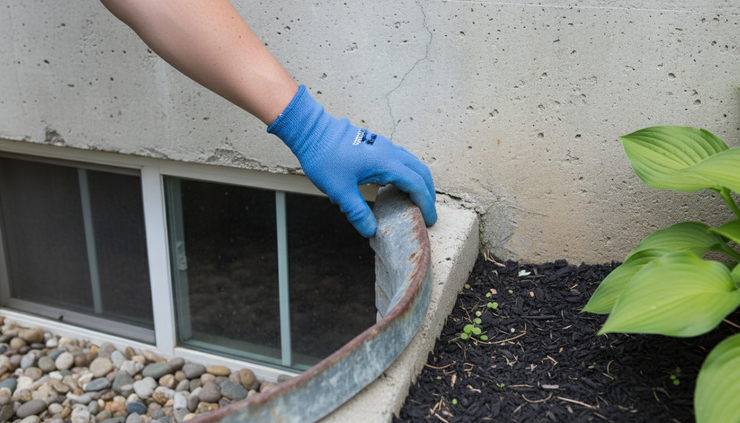
A window well creates a protected pocket around the window. It holds the surrounding soil back and gives the window a clear opening. This matters for basic performance. A window cannot do its job if the sash is buried, the frame is packed with mud, or the exterior side cannot be reached for maintenance.
InterNACHI’s inspection guidance emphasizes looking at window wells for conditions such as debris, poor drainage, corrosion, and improper installation because these conditions can affect the window and the structure around it.[^1]
For windows at or below ground level, the well acts like a small retaining system. It gives the window room to exist below grade without being swallowed by the grade.
Window wells help manage water before it reaches the window
Below-grade windows are exposed to runoff in a way upper windows are not. Rainwater can flow across the yard, bounce off hard surfaces, or collect in low areas. If the ground slopes toward the house, that water may head straight for the basement window.
A properly installed window well helps by creating a controlled space where water can drain down and away instead of sitting against the window. Many wells include gravel at the bottom to promote drainage. In some homes, the well may connect to a drain system, depending on the design and local requirements.
The key point is simple: a window well is not supposed to be a bucket. If it fills with water, it can put pressure on the window and increase the chance of leakage into the basement. InterNACHI inspectors commonly check whether wells are clogged with leaves, soil, mulch, trash, or snow because blocked drainage can cause water problems.[^1]

Good drainage around a window well also depends on the surrounding grade. Soil should generally slope away from the foundation so water does not collect at the house. InterNACHI’s general exterior inspection standards and training materials often stress proper grading and drainage near foundations because moisture is one of the most common causes of building damage.[^3]
Window wells preserve emergency escape and rescue access
The most serious reason for a window well is safety. Many basement sleeping rooms need an emergency escape and rescue opening. If that opening is below grade, the window well must provide enough clear space for a person to get out and for emergency responders to get in.
The International Residential Code includes specific provisions for emergency escape and rescue openings, commonly found in IRC Section R310. For below-grade escape windows, the code addresses window well size, clear horizontal area, minimum dimensions, and ladders or steps when wells are deeper than a certain amount.[^2]
InterNACHI’s basement egress window guidance discusses these same practical concerns. A window used for emergency escape is not just about the glass size. The well outside the window must also be usable.[^1]
A compliant egress window well typically needs to allow:
The window to open fully
A person to climb out without being trapped
Emergency personnel to reach the opening
Ladders or steps where the well is deep enough to require them
Clear space free from stored items, heavy covers, or debris
This is where the phrase Why Windows at or Below Ground Level Need Window Wells According to InterNACHI becomes practical, not theoretical. If the opening is blocked by soil, a narrow pit, a rusted cover, or a pile of leaves, it may fail at the moment it matters most.
Window wells make inspection and maintenance possible
A below-grade window needs regular attention. The exterior side may collect leaves, weeds, mulch, toys, windblown trash, or snow. The well itself can rust, pull away from the foundation, crack, shift, or lose its attachment.
Without a window well, there may be no safe or practical way to see the condition of the lower frame, flashing, caulking, or surrounding wall area. With a well, inspectors and homeowners can check for warning signs.
Common concerns include:
Standing water
Water at the bottom of the well suggests poor drainage or a clogged drain.
Soil or mulch inside the well
Organic material holds moisture and can invite insects.
Rust or loose fasteners
Metal wells can deteriorate, especially where drainage is poor.
Cracked masonry or foundation walls
Movement or water damage near the opening may need further evaluation.
Blocked egress path
Covers, stored items, or vegetation can interfere with emergency use.
InterNACHI inspectors are trained to report visible defects and safety concerns, not to perform destructive testing. That makes visible access important. A window well gives inspectors a place to observe what is happening around a vulnerable part of the home.[^3]
Covers can help, but they do not replace the well
Window well covers can reduce leaves, snow, pests, and accidental falls. They are useful, especially where wells are deep or near walkways. But a cover does not replace the well itself.
A safe cover should not prevent emergency escape. If the window is an egress opening, the cover needs to be openable from the inside without special tools, keys, or unusual force. This aligns with the intent of emergency escape requirements in the IRC.[^2]
A good cover also needs to fit well and shed water away from the opening. A cracked or sagging cover can dump water into the well or make the area unsafe.
What a good window well setup looks like
A well-designed window well is not complicated, but several details need to work together. Look for:
A well that is securely attached and not pulling away
Enough clearance for the window to open
Clean gravel or another drainage method at the bottom
No standing water after normal rainfall
Grade that slopes away from the house
No mulch, soil, or vegetation packed against the window
Steps or a ladder where required for deeper egress wells
A cover that does not block emergency escape

Window wells are small parts of a house, but they solve big problems. They hold back soil, support drainage, protect window materials, keep the opening visible, and preserve a possible escape route. For any window at or below ground level, the well is part of the window system, not an optional accessory.
If a window well is full of water, packed with debris, rusted through, too small for an egress window, or blocked by a cover that cannot open from inside, it deserves attention. A qualified home inspector or appropriate contractor can help determine whether the condition is a maintenance issue, a drainage problem, or a code-related safety concern.
Sources
[^1]: InterNACHI, “Basement Egress Window Inspection,” International Association of Certified Home Inspectors, https://www.nachi.org/basement-egress-window-inspection.htm
[^2]: International Code Council, International Residential Code, Section R310, Emergency Escape and Rescue Openings, https://codes.iccsafe.org
[^3]: InterNACHI, “Standards of Practice for Performing a General Home Inspection,” International Association of Certified Home Inspectors, https://www.nachi.org/sop.htm


Comments